
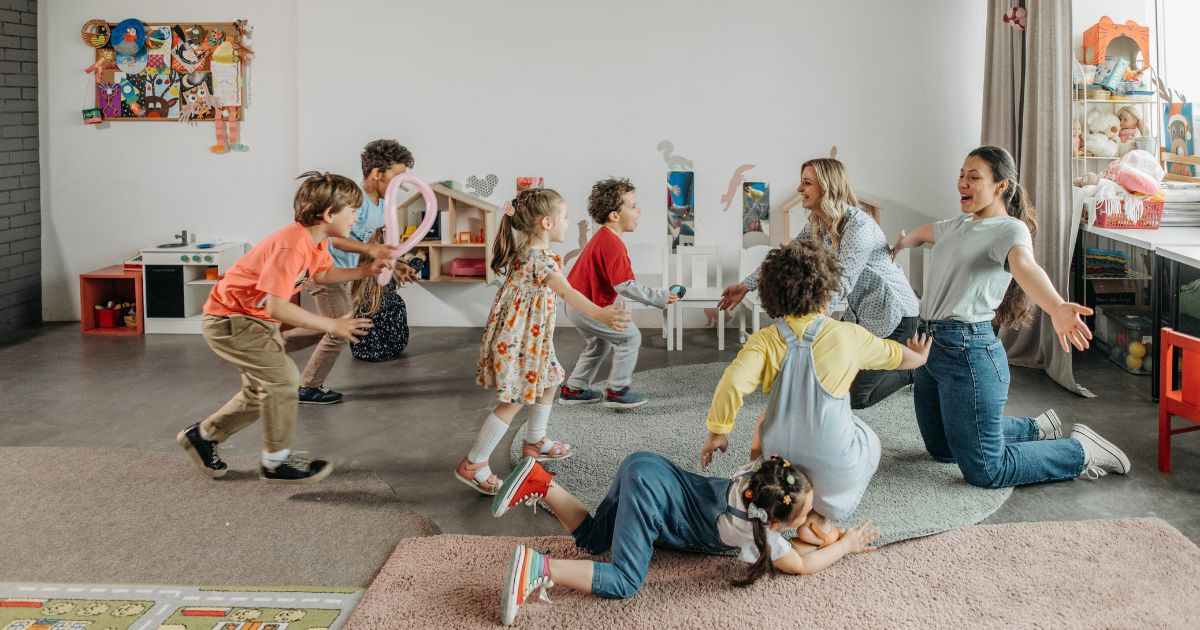
Between ages 7 and 9, children are developing skills that support school learning, daily independence, relationships, and confidence. Many become more coordinated, better able to follow rules, and more capable of explaining ideas or solving problems. Development is not identical for every child, however. The most useful approach is to provide varied opportunities, notice gradual progress, and avoid comparing children too closely with one another.
What motor development looks like at ages 7 to 9
Motor development includes both gross motor skills and fine motor skills. Gross motor skills use the larger muscles of the body for activities such as running, jumping, balancing, climbing, throwing, and catching. Fine motor skills involve smaller, more precise movements, including writing, drawing, cutting, fastening buttons, tying laces, and assembling objects.
At this age, children may become more accurate and controlled in their movements. They may also combine skills more effectively—for example, running while controlling a ball, following a dance sequence, or using both hands together during a craft project. Progress is usually gradual, and a child may be advanced in one area while still building confidence in another.
Gross motor activities
Regular movement gives children opportunities to practise balance, strength, timing, spatial awareness, and body control. Activities do not need to be competitive or highly structured to be useful.
- Active games: Tag, obstacle courses, relay games, and playground activities encourage children to change direction, stop safely, and judge distance.
- Sports and movement classes: Swimming, cycling, dance, martial arts, gymnastics-style activities, and team sports may help develop coordination and stamina when the child enjoys participating.
- Outdoor exploration: Walking, climbing, hiking, and playing on different surfaces require children to adjust their balance and movement to changing spaces.
- Ball practice: Throwing, catching, kicking, dribbling, and aiming at a target help children practise timing and hand-eye or foot-eye coordination.
Children do not have to enjoy organised sport. A child who dislikes team games may prefer dancing, swimming, cycling, imaginative outdoor play, or short active challenges at home. The best activity is one the child can do regularly without feeling constantly judged.
Fine motor activities
Fine motor control supports classroom tasks and everyday self-care. Useful activities should involve real manipulation rather than simply asking children to repeat handwriting exercises.
- Building and construction: Blocks, model kits, magnetic tiles, and age-appropriate building sets encourage precision and planning.
- Creative work: Drawing, painting, folding paper, modelling clay, sewing with supervision, and making collages strengthen hand control while allowing self-expression.
- Practical tasks: Cooking, opening containers, sorting small objects, using scissors, and fastening clothes provide meaningful practice.
- Puzzles and tabletop games: These activities involve grasping, placing, turning, and manipulating pieces while also requiring attention.
Short, frequent practice is generally easier to sustain than a long session that causes frustration. Adjust the difficulty so the child has a reasonable chance of success, then add a small challenge when the task becomes comfortable.
Cognitive development: thinking, remembering, and learning
From 7 to 9, children often become better able to focus on a task, remember instructions, use language precisely, and explain their reasoning. They may start to notice patterns, compare different solutions, predict what might happen, and understand that a problem can have more than one possible answer.
These abilities are still developing. Children may think logically in a familiar, hands-on situation but struggle with a purely abstract explanation. Concrete examples, visual reminders, and manageable steps can make new ideas easier to understand.
Activities that support cognitive skills
- Read and discuss stories: Ask what a character wanted, why a choice was made, what might happen next, or how the ending could change. Discussion supports comprehension without turning reading into a test.
- Play strategy and logic games: Chess, checkers, dominoes, card games, matching games, mazes, and logic puzzles may encourage planning, memory, flexible thinking, and attention.
- Use everyday problem-solving: Invite children to plan a shopping list, work out how to divide materials, estimate how long a task may take, or decide which items belong in a travel bag.
- Encourage questions and explanations: Ask, “How did you work that out?” or “What could you try next?” This focuses on reasoning rather than only on the answer.
- Offer creative projects: Writing a short story, composing a rhythm, designing a structure, or making a comic requires children to organise ideas and make decisions.
How motor and cognitive skills work together
Physical and cognitive development are not separate activities. During a sport or active game, children may need to remember rules, anticipate another person’s movement, choose a response, and manage frustration. During construction or craft work, they may plan an outcome, judge size and position, solve problems, and adjust their movements when something does not work.
This is why a varied routine can be more useful than concentrating on one type of activity. Reading develops language and understanding; movement develops body control; building and games develop planning; creative work develops expression and flexible thinking. These activities can overlap and reinforce one another without needing to be presented as formal lessons.
| Activity | Motor practice | Cognitive practice |
|---|---|---|
| Building a model or structure | Hand control, precision, and coordination | Planning, sequencing, and problem-solving |
| Playing a ball game | Balance, timing, and tracking movement | Rule-following, decision-making, and anticipation |
| Cooking with an adult | Measuring, stirring, pouring, and hand use | Following steps, estimating, and observing change |
| Creating a story or comic | Writing, drawing, and page organisation | Language, memory, imagination, and sequencing |
Practical ways adults can support development
Support does not require a specialised programme or a packed schedule. Ordinary routines can provide repeated practice when adults make expectations clear and allow children to participate actively.
- Offer limited choices: Present two or three suitable options, such as drawing, cycling, or a construction project. Choice can increase involvement without making the child manage an overwhelming number of possibilities.
- Give concise instructions: Explain one or two steps at a time, especially when the task is new. Ask the child to repeat the plan or show the first step if it is important.
- Use demonstration and visual reminders: Showing how to pack a school bag, tie a knot, or begin a project may be clearer than giving a long verbal explanation.
- Break large tasks into stages: “Organise your homework” is vague. “Take out your reading book, write the first task, and choose a place to work” gives the child a workable starting point.
- Focus feedback on useful behaviours: Notice persistence, careful checking, listening, improvement, and willingness to try a different method—not only speed or the final result.
- Protect time for open-ended play: Children need opportunities to choose what to do, invent rules, and solve problems without an adult correcting every decision.
- Build movement into routines: Walking short distances, helping in the garden, taking active breaks, or carrying safe household items can add movement without turning every activity into training.
Common mistakes to avoid
Good intentions can sometimes make learning and movement less enjoyable. The following approaches may create unnecessary pressure or reduce useful practice.
- Comparing siblings or classmates: Comparisons can hide individual strengths and make a child reluctant to attempt difficult tasks.
- Insisting on one “right” activity: A child may develop coordination through dance, outdoor play, crafts, or swimming rather than through the sport an adult prefers.
- Correcting every mistake: Frequent interruption can reduce concentration and independence. Offer one specific suggestion, then allow the child to try again.
- Doing the task for the child: Finishing a project quickly may be convenient, but leaving suitable parts for the child provides more practice in planning and control.
- Making practice too long: Tiredness and frustration can make a child associate the skill with failure. Brief sessions with a clear stopping point are often more sustainable.
- Assuming lack of interest means lack of ability: The activity may be too difficult, too easy, socially uncomfortable, or simply a poor match for the child’s interests.
When closer observation may be helpful
Variation is normal, but adults should pay attention to patterns that persist across settings or interfere with everyday life. Examples may include ongoing difficulty with basic movement, frequent falls beyond what seems typical for the child, marked trouble using writing tools, or persistent difficulty following ordinary instructions and completing age-appropriate tasks.
Observe what happens, when it happens, and what support makes a difference. A teacher, pediatrician, occupational therapist, physiotherapist, or other qualified professional may be able to suggest an appropriate assessment or practical strategies. One disliked activity is not enough to indicate a developmental problem, but persistent concerns deserve a thoughtful conversation rather than blame or repeated pressure.
Creating a balanced routine
A balanced week might include active outdoor play, a short period of reading or discussion, a hands-on project, and time for unstructured play. The exact combination should reflect the child’s interests, energy, family circumstances, and school demands.
The aim is not to accelerate development or turn every moment into instruction. It is to give children repeated chances to move, think, communicate, create, and manage small responsibilities. With patient guidance and realistic expectations, these everyday experiences can support growing coordination, confidence, independence, and problem-solving.


