
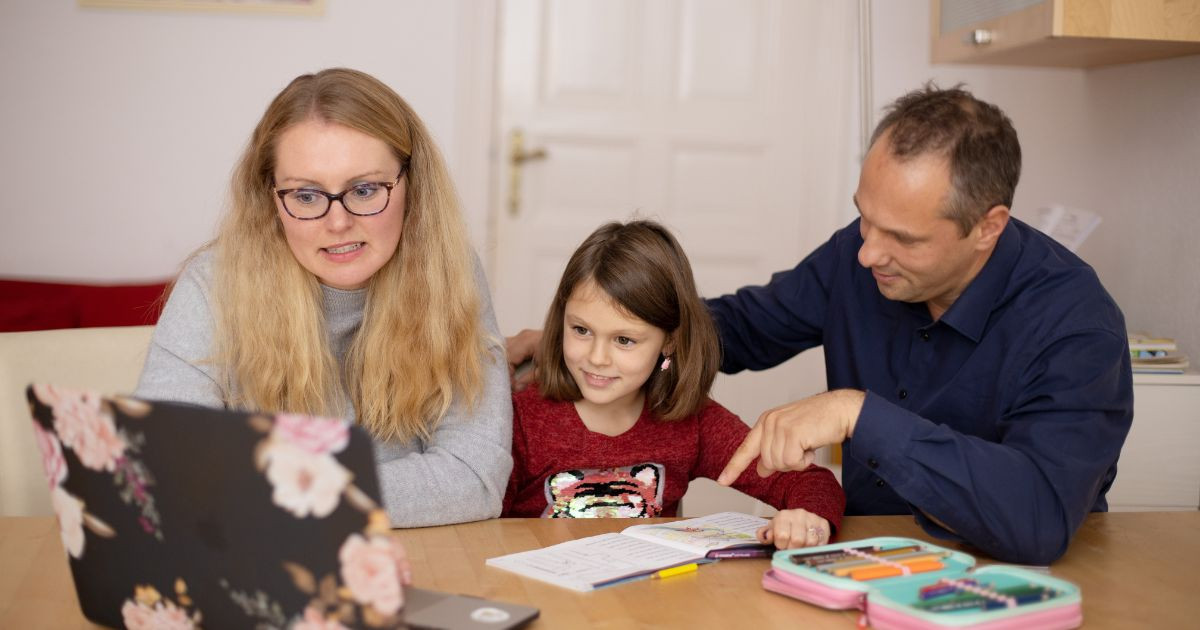
The way parents respond to a child’s behaviour has a major influence on how the child learns to manage emotions, delay gratification, and cope with frustration. It is not only about whether a parent is strict or warm. What matters is whether they can set boundaries, listen, explain, and still leave room for independence. These everyday responses gradually shape both self-control and personal growth.
Parenting also does not look the same at every stage of a child’s life or at every stage of the parent’s life. A young parent with small children approaches things differently from a parent of a teenager, and an older parent may have more experience but also more worries. Age diversity in a family is therefore not only about children of different ages, but also about parents being at different life stages, which changes both parenting style and its effects.
How Parenting Style Shapes Self-Control
A child does not learn self-control from one conversation, but from repeated situations. When a parent responds calmly to anger, the child slowly learns that strong emotions can be handled without shouting or shutting down. When the parent reacts in a chaotic, overly rigid, or unpredictable way, the child may learn defensive reactions instead of inner calm.
In general, the most supportive approach combines clear limits with respect. The child knows what is expected, but also feels that their feelings are not mocked or dismissed. This can strengthen the ability to wait, tolerate discomfort, and think before reacting. By contrast, when boundaries are unclear or change with the parent’s mood, self-control is harder to develop.
When a Parent Is Too Strict
Strictness itself is not necessarily a problem. The problem starts when it is tied to humiliation, threats, or the child having no chance to explain their point of view. In that case, the child may learn to obey out of fear rather than understanding. Outwardly, the child may seem disciplined, but inwardly they can become tense, rebellious, or overly dependent on external control.
This style can limit personal growth, especially if the child receives only instructions and little space to make their own decisions. Later, they may struggle to take responsibility without being told what to do, because they were not guided toward inner judgment.
When a Parent Is Too Permissive
At the opposite end is the parent who gives in almost all the time to avoid conflict. The child may then feel free, but may not learn how to tolerate frustration, wait, or respect rules. If everything can be negotiated, self-control does not develop naturally because the child has too few chances to practise it in real situations.
A permissive approach can be kind and safe in some moments, but without boundaries it can easily turn into chaos. The child may then fail to understand the difference between freedom and doing whatever they want.
A Balanced Parent
Balanced parenting is not built on perfection, but on predictability. The parent can say “no”, explain why, and still accept the child’s emotions without turning the moment into a power struggle. This approach can help a child develop inner discipline, because rules are not only restrictions but also a form of support.
When a child repeatedly experiences stable and respectful boundaries, it becomes easier to regulate behaviour. The child also gains the sense that even difficult situations can be managed without humiliation or fear.
Personal Growth Also Needs Room for Mistakes
Personal growth does not mean only obedience or good grades. It also includes the ability to name one’s needs, recover from mistakes, look for solutions, and accept consequences. Parents can support this by not protecting the child from every mistake, but helping them understand what happened and what they can do differently next time.
If a parent solves every situation for the child, it may bring short-term relief, but in the long run it reduces the child’s chances to practise independence. On the other hand, if the parent expects a reasonable level of responsibility for the child’s age, the child learns to trust their own abilities.
Age Changes How Children Learn Independence
With younger children, self-control is mainly about simple rules, repetition, and safe routines. They need short instructions, clear structure, and a lot of practical demonstration. At this stage, guidance is more helpful than long explanations.
A school-age child can handle more decisions and can take part in agreements. Here, it is important that the parent does not control every detail all the time, but allows space for small failures. That is how responsibility is learned.
With teenagers, the relationship itself changes. They need more respect, more conversation, and fewer one-sided bans. If a parent stays only with strict control, a teenager may react with resistance or withdrawal. But if the parent combines boundaries with trust, they support the young person’s ability to make wiser decisions.
The Parent’s Age and Life Stage as a Parenting Factor
Age diversity also appears on the parent’s side. A younger parent may have more energy and flexibility, but less calm and experience. An older parent may be more grounded, better at handling emotions, and more patient, but sometimes also more worried about the child’s safety or less willing to try new approaches.
That does not mean one age is better than another. What matters more is whether the parent can recognise their limits and avoid passing their own tension on to the child. A parent going through a difficult life stage, such as exhaustion, work stress, or health worries, may react more sharply than usual. In that moment, it helps to see this not as a character failure, but as a sign that more support and rest are needed.
What Parents Can Do in Everyday Situations
If a parent wants to support self-control and growth, they do not need to change the whole system at once. Small, repeatable steps are often the most useful:
- Speak briefly and clearly. Children respond better to concrete rules than to long lectures.
- Hold boundaries without humiliation. Disagreement can be firm without being harsh.
- Name emotions. For example, “I can see that you are angry” helps the child separate feeling from behaviour.
- Offer reasonable choices. Choosing between two options supports independence without creating chaos.
- Do not rescue the child from every consequence. If the result is safe and appropriate, it can become a learning experience.
- Show your own self-awareness. When a parent admits they reacted too quickly, they teach the child how to work with mistakes.
These steps may not work immediately. Especially with children who are used to inconsistent boundaries, the transition can be difficult. The child may test whether the new boundary really stands. That is normal and does not mean the parent should give in at the first sign of resistance.
Common Mistakes in Raising Self-Control
One common mistake is confusing obedience with self-control. A child who is afraid of punishment may obey on the surface, but still not know how to regulate their own behaviour. Another mistake is expecting maturity from a child that they do not yet have because of their age. This creates unnecessary frustration for both sides.
Inconsistency is another problem. If a rule applies one day and not the next, the child learns to negotiate based on the situation rather than develop an inner sense of order. Overprotection also does not help, especially when the parent steps in at every sign of discomfort. The child may then fail to develop resilience.
At the same time, more strictness does not automatically bring better results. If the family is exhausted, conflict-ridden, or under heavy stress, simply becoming stricter may not help. In that case, it is often more important to simplify the routine, reduce chaos, and look for stability.
How the Parent and Relationship Can Change
Parenting is not fixed forever. Many parents eventually realise that some automatic reactions are actually harming the relationship. That is an important moment of personal growth for the adult as well. When a parent starts listening more, reacting less impulsively, and managing stress better, the atmosphere in the family usually changes too.
This change does not need to be dramatic. Sometimes it is enough to begin with one rule, one calmer response, or one conversation after a conflict. Children notice not perfection, but consistency. If they see that an adult can admit a mistake while still holding a boundary, they learn something very valuable: self-control is not about suppressing emotions, but about acting thoughtfully even under pressure.
For that reason, it is useful to pay attention not only to what the child does, but also to the model they receive every day. That is where it becomes clear whether the parenting style supports only obedience, or also inner strength, responsibility, and healthy personal growth.


