
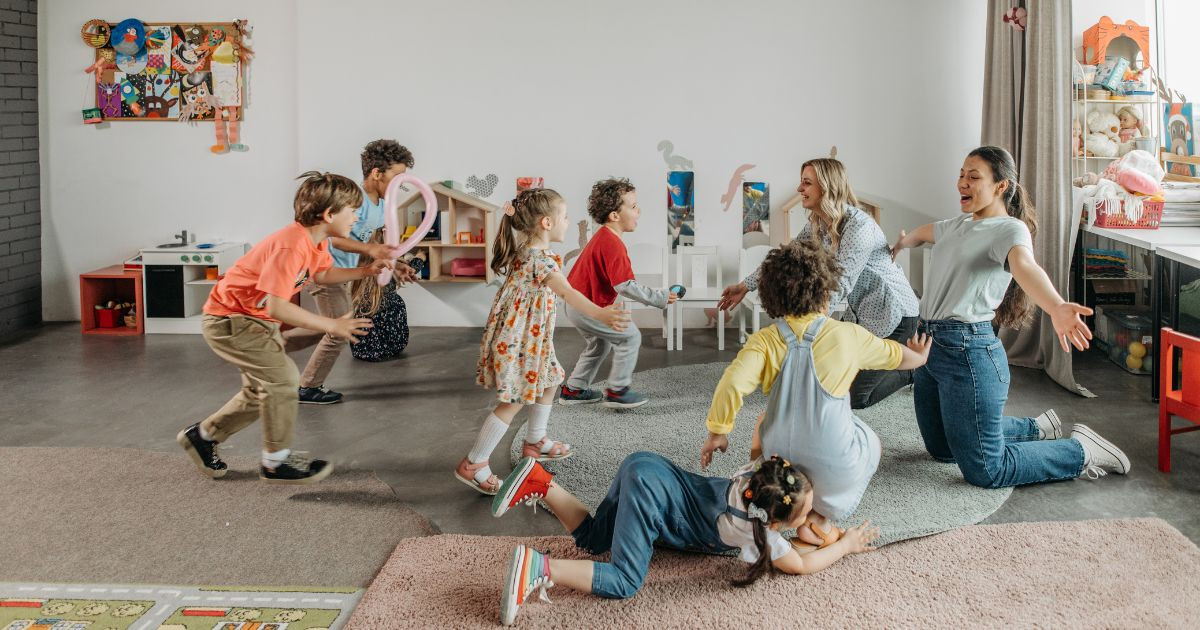
Children aged 7 to 9 are refining how they move, think, and solve problems. At this stage, many children are ready for activities that are more structured than simple play, but still flexible enough to stay fun. Well-designed challenges can support coordination, hand control, attention, planning, and problem-solving at the same time. This article explores practical activities that parents, teachers, and caregivers can use at home or in school, along with simple ways to adjust them for different abilities and interests.
Why motor and cognitive skills matter at this age
Motor skills help children control their bodies. Gross motor skills involve large movements such as running, balancing, jumping, and throwing. Fine motor skills involve smaller, more precise actions such as writing, cutting, drawing, buttoning, or handling small objects. At ages 7 to 9, these abilities are still developing and become more important as schoolwork becomes more demanding.
Cognitive skills involve how children pay attention, remember information, understand instructions, and solve problems. These skills support learning in reading, math, science, and everyday decision-making. When children practice movement and thinking together, they often build stronger coordination between what they see, what they plan, and what they do.
Creative challenges that strengthen gross motor skills
Gross motor activities are useful when children need to move their whole bodies in different ways. The best challenges usually combine movement with a rule, a target, or a sequence to follow. That keeps the activity active while also adding a thinking element.
Obstacle courses
A simple obstacle course can be made with chairs, cushions, boxes, tape lines, or a jump rope. Children can crawl under a table, step over pillows, hop from one spot to another, or weave around objects. To make the challenge more useful, change the rules each round. For example, one round may focus on speed, another on careful balancing, and another on following a specific order. This helps children practice planning as well as movement.
Balloon games
Balloon-based games are useful because balloons move slowly, giving children time to react and adjust. A child can keep one balloon in the air, move while balancing a balloon, or work with a partner to keep it from touching the floor. These games may support coordination, timing, and body control. They also work well in small indoor spaces, which makes them practical for home use.
Movement copy games
Ask one child or adult to perform a sequence of actions, such as clapping, turning, jumping, and crouching, while the child copies the pattern. Start with two or three movements and gradually make the sequence longer. This type of activity supports memory, attention, and motor planning because children must remember the order and reproduce it accurately.
Fine motor activities that also encourage creativity
Fine motor practice is especially important for children who are writing more, using scissors, or working with small classroom materials. The goal is not only precision, but also control and endurance.
Cutting, gluing, and collage work
Provide paper in different colors, child-safe scissors, glue sticks, and magazines or scrap paper. Children can cut out shapes, arrange them into scenes, and build collages. This activity strengthens hand control and bilateral coordination, since one hand often holds the paper while the other cuts. It also encourages decision-making, because children must choose what to include and how to organize their design.
Drawing with a purpose
Instead of open-ended drawing only, give children a clear task: draw a route on a map, sketch a monster with specific features, or copy a pattern with lines and shapes. Purposeful drawing can support attention to detail and visual-motor skills. If a child struggles with pencil control, shorter sessions are usually better than long ones.
Building with small materials
Blocks, beads, paper strips, recycled cardboard, and simple craft materials can be used to build structures or make models. Children can create a robot, a bridge, or a small house. These tasks support hand strength, finger control, and spatial thinking. They also allow children to test ideas, notice what does not work, and revise their design.
Games that support thinking and problem-solving
Cognitive development does not have to happen through worksheets alone. Games can be a better way to practice thinking because they give children a clear goal and immediate feedback.
“What happens if?” questions
Ask children to think through simple cause-and-effect questions. For example: What happens if we mix two colors? What happens if we build a tower on a soft surface? What happens if we use too much glue? These questions encourage prediction and reasoning. They work best when you let children explain their thinking, even if their answer is not fully correct.
Board games and strategy games
Age-appropriate board games can strengthen turn-taking, rule-following, patience, and planning. Games that require players to think ahead, count moves, compare options, or remember rules are especially useful. If a child becomes frustrated, keep the game shorter or choose one with simpler rules. The value of the activity is often in the decision-making process, not in winning.
Puzzles and logic tasks
Puzzles help children notice patterns, break problems into parts, and persist through difficulty. Start with a level that is challenging but not overwhelming. If the puzzle is too easy, children lose interest; if it is too hard, they may give up. Small logic games, matching tasks, and visual riddles can also help children practice careful observation and flexible thinking.
Activities that combine movement and thinking
The strongest learning opportunities often come from activities that ask children to move and think at the same time. These tasks may be especially useful because they mirror real-life situations, where children often need to listen, remember, decide, and act quickly.
Following instructions in sequence
Give children a sequence of movements such as “jump twice, turn around, touch the chair, and clap.” Start with short instructions and add more steps as the child becomes comfortable. This activity supports listening skills, memory, and motor coordination. It is helpful to demonstrate once first, then ask the child to repeat the sequence independently.
Painting with large movements
Let children paint on large paper using broad arm motions, or have them stand while painting a wall-sized sheet of paper. They can use brushes, sponges, or even their hands depending on the materials available. This type of activity combines creativity with full-body movement and may be especially engaging for children who find traditional seated tasks tiring.
“Who am I?” with movement clues
In this game, children guess a person, animal, or character by asking questions or by observing gestures. To make it more active, one child can act out the clue using body movements while others guess. The game supports language development, attention, and social interaction, and it can be adapted for one-on-one play or group settings.
How to make the activities more effective
Consistency matters more than complexity. Short, regular activities are usually better than occasional long sessions. A few minutes of focused play several times a week can be more useful than trying to do too much at once. Children also benefit from activities that gradually become more difficult, so they stay challenged without feeling overwhelmed.
It helps to vary the format. Some days can focus on movement, other days on crafting or puzzles, and some on combined tasks. Variety keeps children engaged and gives them repeated practice in different areas. If a child has a clear preference, use that interest as a starting point. For example, a child who likes cars might enjoy building roads or obstacle courses, while a child who likes stories may prefer acting games or puppet-based challenges.
Creating a supportive environment
A good environment does not need to be expensive or highly organized. It simply needs to be safe, accessible, and flexible. Keep useful materials within reach, such as paper, scissors, tape, blocks, coloring tools, and simple household items that can be reused for play. Clear space for movement when needed, and make sure children know where they can experiment without worrying about making a mistake.
Children often learn best when adults allow space for trial and error. If a tower falls, a puzzle does not fit, or an obstacle course does not work the first time, that is part of the process. Instead of fixing the task immediately, it is often better to ask what the child wants to change next.
The role of parents and educators
Parents and educators can guide activities without taking over them. Their role is to set clear boundaries, offer encouragement, and help children notice what they are doing well. Simple prompts such as “What could you try next?” or “How did you solve that problem?” can support reflection without pressure.
Adults should also watch for signs that a task is too easy, too hard, or physically uncomfortable. Some children need more time, simpler instructions, or shorter activity periods. Others need more challenge to stay interested. Adjusting the task to the child is usually more effective than expecting every child to respond in the same way.
Examples of creative projects worth trying
- Recycled robot building: Children create robots from cardboard, bottle caps, paper tubes, and tape. This supports planning, hand control, and creative problem-solving.
- Mini theater performances: Acting out stories or invented characters may help with memory, expression, cooperation, and body awareness.
- Simple science experiments: Activities such as mixing materials, observing changes, or testing what floats and sinks can encourage curiosity and reasoning.
Conclusion
Creative challenges can be a practical way to support the motor and cognitive development of children aged 7 to 9. The most useful activities are usually simple, varied, and adjustable. When children move, build, draw, solve, and explain, they practice skills that support both school learning and everyday independence. The key is to offer regular opportunities, clear guidance, and enough freedom for children to explore at their own pace.


