
Children aged 7 to 9 are at an important stage for building social and communication skills. At this age, many can explain ideas more clearly, listen to others for longer, and begin to work together with more confidence. Visual journals can support that development by giving children a simple way to combine drawing, writing, symbols, and collage to express what they think and feel.
A visual journal is not just an art activity. Used well, it can become a practical tool for reflection, sharing, and group discussion. Because children can communicate through images as well as words, visual journals may help those who are still developing confidence in writing or speaking. They can also make collaboration easier by giving children something concrete to discuss together.
Why visual journals can support communication
Visual journals encourage children to organise their thoughts in a way that is visible. When a child draws a scene, adds labels, or chooses colours to show a mood, they are making decisions about meaning. That process can support language development because it often leads to questions such as “Why did you choose that?” or “What happened next?”
For some children, speaking about a drawing feels easier than answering a direct question. A page in a journal can act as a starting point for conversation instead of a task that must be completed perfectly. This may help children contribute more in group settings, especially if they are quiet, cautious, or still learning to organise their ideas verbally.
How visual journals can support collaboration
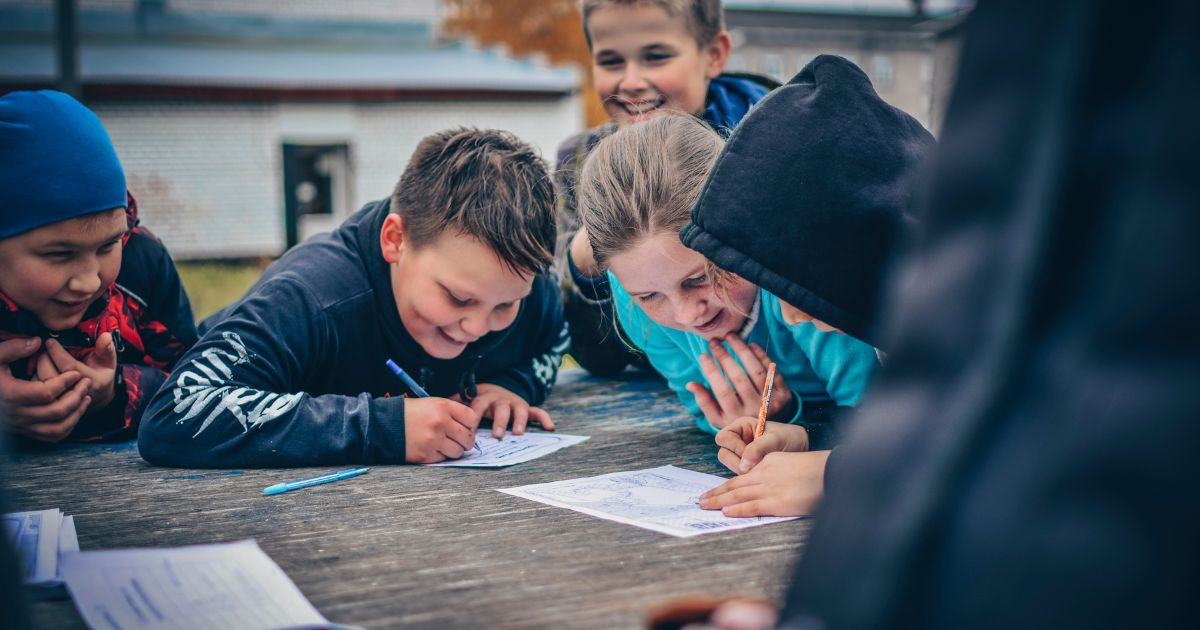
Visual journals can also be used in pairs or small groups. For example, children can create pages based on the same theme and then compare how each person interpreted it. This helps them notice that one idea can have many valid versions, which is an important part of working with others.
When children share journal pages, they practise skills such as:
- listening without interrupting;
- asking questions about another person’s ideas;
- giving simple, respectful feedback;
- building on someone else’s contribution;
- making joint decisions about a shared task.
These are basic collaboration skills, but they are often easier to practise in a visual format than in a long spoken discussion.
How to introduce visual journals
If you are a parent or educator, start with a simple routine rather than expecting polished results. The goal is not to create perfect artwork. The goal is to give children a clear structure that helps them express ideas.
Choose a manageable theme
Good themes are familiar and open-ended. Topics such as “my day,” “my favourite place,” “animals I know,” or “what teamwork looks like” give children enough direction without limiting their ideas. A theme should be broad enough for children to respond in different ways.
Offer a range of materials
Children can use crayons, pencils, markers, magazine cut-outs, labels, photographs, stickers, or simple handwritten notes. Different materials allow different levels of comfort and skill. Some children prefer drawing first and writing later, while others may want to add short captions to explain their images.
Keep the routine predictable
A short regular session often works better than an occasional long one. For example, a weekly journal time can help children know what to expect. Predictability matters because it gives them more confidence to participate and more time to think about their ideas.
Practical ways to use visual journals
Visual journals can be used in many ways, depending on the setting and the child’s needs.
- Individual reflection: Children draw or write about an event, feeling, or idea, then explain it to an adult or peer.
- Pair work: Two children create related pages and then compare similarities and differences.
- Group discussion: The class responds to the same prompt and talks about how each journal page is different.
- Project support: Children use journals to plan a story, science topic, or class project before presenting it.
In all of these cases, the journal works best when the adult guides the process with simple prompts and open questions.
Questions that help children reflect
Reflection is important because it helps children move beyond drawing for its own sake and start explaining what their work means. The best questions are short, specific, and easy to answer.
- What is happening in your picture?
- Why did you choose these colours or shapes?
- What part was easiest or hardest to make?
- What would you add if you had more time?
- How is your idea similar to or different from your partner’s?
These questions can help children describe their choices, compare perspectives, and listen to others more carefully. They also encourage them to notice that there are many ways to solve the same creative task.
Games and activities that strengthen the same skills
Visual journals work well alongside other cooperative activities. Games that require children to plan together, solve problems, or take turns speaking can reinforce the same communication skills.
- Build a tower: Small teams use paper, cardboard, or cups to build the tallest stable tower they can. Children must agree on a plan and adjust it when needed.
- Team puzzles: Children solve a puzzle together and practise sharing pieces, ideas, and strategies.
- Story circle: Each child adds one sentence to a group story, which helps them listen carefully and continue another person’s idea.
These activities are most useful when adults focus on the process, not only the result. The point is to practise cooperation, not simply to “win.”
Ideas for visual journal pages
Some prompts are especially useful for children aged 7 to 9 because they connect personal experience with discussion.
- Feelings journal: Children record how they feel using colours, symbols, words, or drawings. This can make emotions easier to talk about.
- My favourite place: Children draw a place they like and explain why it matters to them.
- A good team moment: Children show a time when they worked well with someone else and describe what made it successful.
- My goals for this week: Children create a simple page about something they want to practise or improve.
These prompts are useful because they invite both personal expression and conversation, which is where communication skills often develop most clearly.
Common mistakes to avoid
Visual journals are most effective when adults keep the activity simple and low-pressure. A few common mistakes can reduce their value.
- Making the page too complicated: Too many instructions can stop children from exploring ideas freely.
- Focusing too much on neatness: The journal should support thinking and expression, not only appearance.
- Comparing children’s work: Different styles are expected, and comparisons can discourage participation.
- Skipping discussion: The conversation after the page is created is often what makes the activity useful for communication.
If a child is reluctant to write, allow them to dictate a sentence, draw more, or use labels instead of full paragraphs. Flexibility helps keep the journal accessible.
Conclusion
Visual journals can be a practical way to support collaboration and communication in children aged 7 to 9. They give children a structured but creative space to express ideas, listen to others, and reflect on shared experiences. When adults provide clear themes, simple materials, and regular opportunities to talk about the pages, visual journals may become a useful part of both home and classroom learning.


