
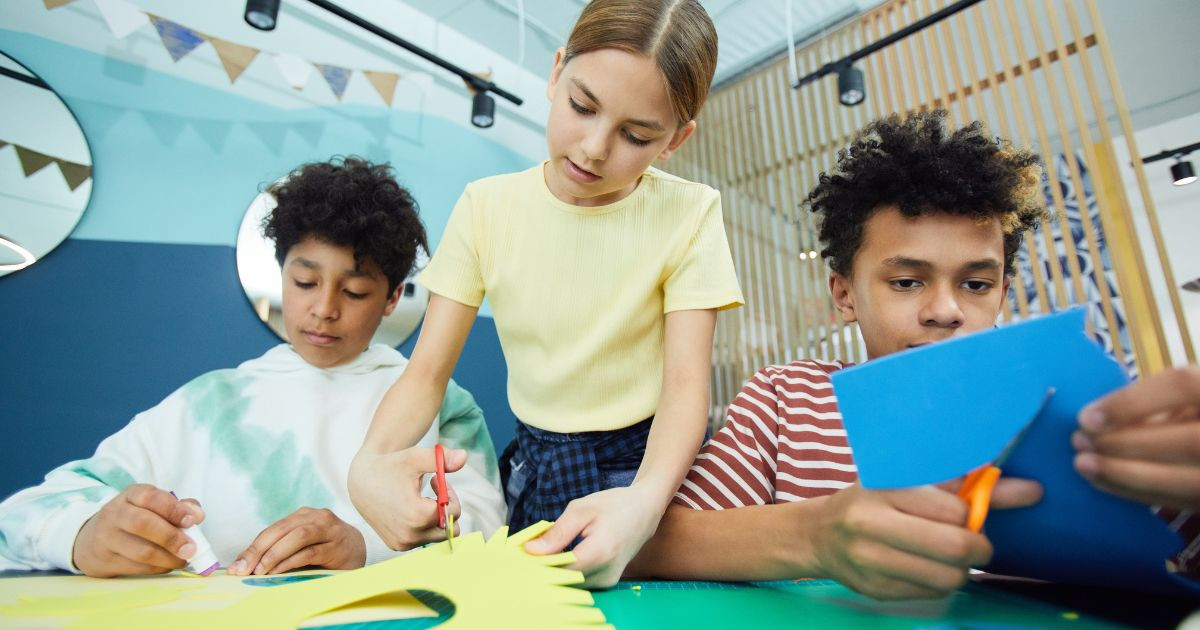
Children ages 7 to 9 are usually curious, energetic, and ready to test new ideas. This is a useful stage for supporting creativity and imagination, not because every child must become an artist or inventor, but because creative thinking may help children solve problems, adapt to new situations, and express themselves more confidently. The best approach is not to pressure them into being “creative” on demand. It is to give them time, materials, freedom, and encouragement to explore.
Creativity grows more easily when adults create the right conditions. That means offering open-ended activities, asking thoughtful questions, and allowing children to make choices without worrying too much about perfect results. The ideas below are practical for parents, teachers, and caregivers who want to support creative development in everyday life.
Create a space where children can explore
A child does not need a perfect art room to be creative, but it helps to have a place where making, building, drawing, and testing ideas is normal. A stimulating environment gives children permission to experiment.
- Keep simple materials available: Paper, pencils, crayons, scissors, glue, cardboard, blocks, clay, and recycled items can spark more ideas than a single finished toy.
- Make space for messy play: Creativity often involves trial and error. If children are always worried about making a mess, they may avoid experimenting.
- Offer open-ended tools: Items that can be used in many ways, such as building blocks, fabric scraps, or empty boxes, usually support imagination better than toys with only one correct use.
At home, this might be a small shelf or box of creative supplies. In a classroom, it can be a corner where children know they can build, draw, or invent without being interrupted too quickly.
Use games that invite imagination
Play is one of the most effective ways to support creativity in this age group. The best games are usually those that leave room for children to add their own ideas.
- Story-building games: Start a story and let each child add one sentence or one idea. You can also use picture cards or random objects as prompts.
- Drawing from a prompt: Ask children to draw “a house for a dragon,” “a machine that helps at school,” or “an animal that has never existed.”
- Construction activities: Building with LEGO or similar blocks may strengthen spatial thinking and planning while also encouraging invention.
- Role-play: Pretend games, such as running a shop, exploring space, or creating a hospital for toy animals, help children think flexibly and take on different perspectives.
These activities work best when adults avoid over-directing them. If every step is controlled, the child becomes a follower instead of a creator.
Ask questions that lead to thinking
Children often become more imaginative when they are asked questions with more than one possible answer. Open-ended questions encourage them to explain, compare, and invent.
- Instead of asking “Is this right?” try “What else could this be?”
- Instead of asking “Do you like it?” try “Why did you choose that idea?”
- Instead of asking “What happened?” try “What do you think could happen next?”
Questions like these do not need to be difficult. Even simple prompts such as “What would you do if you were invisible for a day?” can help children practice original thinking. The aim is not to get a “correct” answer. It is to encourage explanation, curiosity, and imagination.
Support teamwork without removing independence
Working with other children can strengthen creativity, especially when a group must agree on an idea, solve a problem, or build something together. Team activities also help children learn to listen, negotiate, and respond to different viewpoints.
- Small group projects: Ask children to create a short play, a poster, a model town, or a shared story.
- Brainstorming sessions: Give a simple challenge, such as “How could we make the classroom more welcoming?” and let children suggest many ideas before choosing one.
- Cooperative games: Games that require children to work toward a shared goal can develop communication and patience.
However, teamwork should not mean that one child does all the thinking while others copy. Adults can support the group by making sure each child has a chance to contribute.
Help children solve problems creatively
Creativity is not limited to art. It also shows up when a child finds a new way to solve a practical problem. This is one reason creative thinking and critical thinking work well together.
- Give small challenges: Ask how a toy bridge could be made stronger, how to organize a pile of materials, or how to tell a story from a different point of view.
- Let them test ideas: If a child suggests a solution, encourage them to try it and see what happens before changing it.
- Discuss alternatives: Talk about more than one possible answer so children learn that problems often have several workable solutions.
When children get used to solving manageable problems, they may become more confident in generating ideas on their own. This can be especially helpful when tasks are new or uncertain.
Make room for emotions and self-expression
Children often express feelings through stories, drawing, movement, or pretend play before they can explain them clearly in words. Emotional expression can support creativity because it gives children more material to work with.
- Use drawing or journaling: Some children find it easier to draw how they feel than to talk about it directly.
- Talk about characters’ feelings: When reading stories or watching a film, ask how a character might feel and why.
- Model healthy expression: Adults can show that it is normal to name feelings, discuss frustration, and recover from mistakes.
Empathy also matters. When children learn to imagine how another person feels, they often become better at creating stories, games, and solutions that are thoughtful and realistic.
Feed curiosity with real-world experiences
Children are more likely to generate ideas when they have something interesting to notice, compare, or wonder about. New experiences can provide that input.
- Explore nature: Walks, garden visits, and simple outdoor observations can lead to questions about plants, insects, weather, and patterns.
- Visit museums or galleries: These places can show children that there are many different ways to see the world and express ideas.
- Try workshops or clubs: Art, science, music, and making workshops can introduce techniques children may not discover at home.
- Use online resources carefully: Videos and tutorials can inspire ideas, but they work best when an adult helps children choose age-appropriate, useful content.
The goal is not to overload children with stimulation. It is to give them enough variety to ask questions and make connections.
Recognize effort, not only results
Children are more willing to take creative risks when they feel safe from constant criticism. Praise is most useful when it focuses on effort, persistence, and original thinking rather than only on whether the final product looks polished.
- Notice process: Comments such as “You tried three different ideas before choosing this one” are more helpful than vague praise.
- Avoid comparing children: Comparison can make some children stop trying if they think they are less talented than others.
- Display work respectfully: Hanging a drawing, model, or story in a visible place shows that a child’s ideas matter.
Celebrating work does not mean praising everything equally. It means showing that creativity includes exploring, revising, and learning from mistakes.
Build a routine that leaves time for creativity
Creativity is easier to develop when it is not treated as a rare special event. Children usually benefit from regular time to make, imagine, and explore.
- Set aside predictable creative time: A few short sessions each week are often more effective than one occasional big project.
- Allow unfinished ideas: Not every project needs to be completed immediately. Children may return to an idea later with a better plan.
- Balance structure and freedom: Some children need a clear starting point, while others work better with very little direction. Both approaches can work.
This long-term support matters because creativity develops gradually. A child may not show immediate results, and that is normal.
Common mistakes to avoid
Adults sometimes unintentionally block creativity while trying to help. A few common mistakes are worth avoiding:
- Giving too many instructions: If every activity has one correct outcome, children have less room to think independently.
- Correcting too quickly: Jumping in with the answer can interrupt a child’s own problem-solving process.
- Valuing only talent: Children may assume creativity is something you either have or do not have, when in reality it can be practiced.
- Expecting constant originality: Some children need time, repetition, and examples before they create confidently.
Being supportive does not mean removing all frustration. It means helping children stay engaged long enough to try again.
Conclusion
To encourage creativity and imagination in children ages 7 to 9, focus on environment, play, questions, collaboration, and steady encouragement. Give children materials they can use freely, ask them open-ended questions, and let them explore ideas without worrying too much about making mistakes. Creative thinking grows best when children feel curious, capable, and supported over time.


