
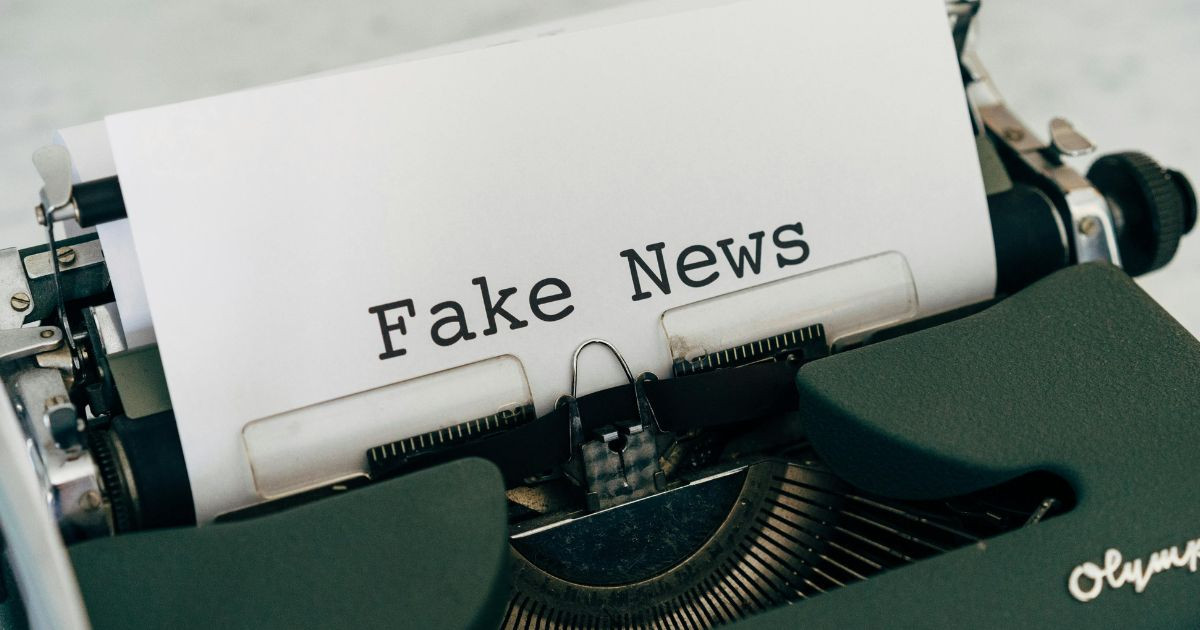
Uncovering Fake News: Recognizing the Price and Value of Truth in a Sea of Disinformation
In today's digital age, information is at our fingertips. However, with this availability comes a vast amount of fake news and disinformation that can significantly impact our decision-making. Recognizing fake news and propaganda can be challenging, but it is a skill that each of us must develop in order to distinguish between the price and value of the information we consume. This blog addresses techniques and strategies for analyzing and uncovering disinformation and propaganda so that we can create a healthier information environment.
In the first part, we will focus on what fake news is and how it arises. Fake news can be spread with the intent to mislead, manipulate, or influence public opinion. It can take various forms, from false reports to distorted facts. It is important to realize that fake news is not just an individual issue, but also involves organizations and states that use it as a tool to achieve their goals.
In the next section, we will introduce some technologies and tools that we can use to uncover disinformation. There are various websites and applications that allow us to verify the truthfulness of a report, such as Snopes, FactCheck.org, or PolitiFact. These platforms gather and analyze information to provide an accurate overview of the truthfulness of claims appearing in the media. Additionally, artificial intelligence algorithms are becoming increasingly important in detecting fake news.
One of the most effective ways to avoid disinformation is to develop critical thinking. Critical thinking involves the ability to analyze and evaluate the information we receive. We can learn to ask questions such as: Who is the author of this information? What are their motives? What are the sources of information? These questions will help us gain a clearer picture of the value of the information we consume.
In addition to critical thinking, education in media literacy is also necessary. Media literacy means the ability to effectively search for, analyze, and create media. This also includes the ability to recognize and uncover fake news and propaganda. There are numerous online courses and workshops that address media literacy. These resources can help us expand our knowledge and skills.
In this section of the blog, we will focus on practical exercises and games that we can use to improve our skills in detecting disinformation. For example, we can play a game where we have to distinguish fake news from true news. There are also many online tests and quizzes that allow us to test our abilities in critical thinking and media literacy.
Another interesting activity is to create our own fact-checking blog or video. In this way, we can share our insights and experiences with others while also strengthening our skills in analyzing and verifying information. We can focus on a specific topic that interests us and try to find truthful information that we can present.
In conclusion, it is important to realize that recognizing fake news and disinformation is a skill that we must continually learn and refine. In today's world, where information is the most valuable asset, it is crucial to distinguish between the price and value of the information we consume. Embrace critical thinking, educate yourself in media literacy, and share your knowledge with others. In this way, you can contribute to creating a healthier and more informed environment for yourself and your loved ones.


