
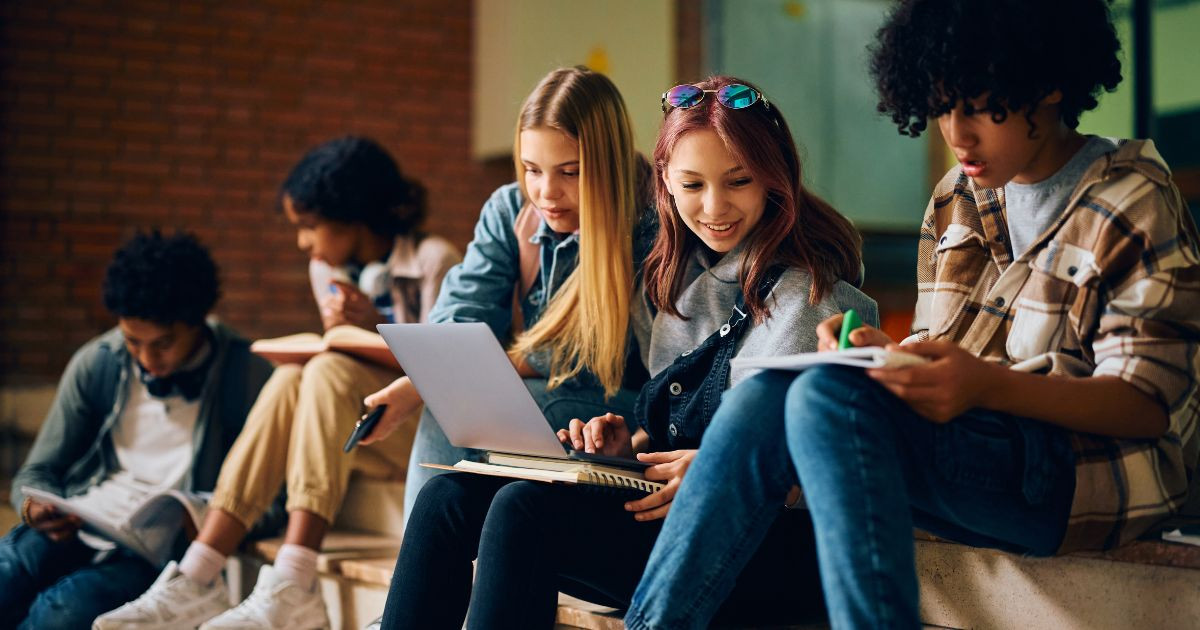
Learning is not only about memorizing facts. For children and teenagers, it is also shaped by how safe, connected, and engaged they feel in the people and places around them. Social skills play an important part in that process because they influence how young people communicate, cooperate, handle frustration, and stay motivated to learn.
This article explains what social skills are, why they matter for learning, and how parents and teachers can support joyful learning in practical ways. The goal is not to treat social skills as a shortcut to academic success, but to show how they may help create the conditions in which learning feels more meaningful and sustainable.
What social skills include
Social skills are the abilities that help people interact well with others. In childhood and adolescence, these skills are still developing, which is why guidance and practice matter so much. Common examples include:
- Communication: expressing ideas clearly and listening to other people.
- Empathy: noticing how someone else may feel and responding thoughtfully.
- Collaboration: working with others toward a shared goal.
- Conflict resolution: dealing with disagreements without escalating tension.
- Active listening: paying attention, asking relevant questions, and showing understanding.
These skills affect more than friendships. They can shape participation in class, willingness to ask for help, and confidence when working in groups. A child who knows how to join a conversation or share a task may find school less stressful and more rewarding.
Why intrinsic motivation matters
Intrinsic motivation is the inner drive to do something because it feels interesting, satisfying, or personally valuable. In learning, it often appears when a child wants to solve a problem, understand a topic, or improve at a skill for their own reasons rather than only for a grade or reward.
This kind of motivation matters because it can support persistence. A student who is curious is more likely to keep going when a task becomes difficult. Social experiences can influence that motivation in several ways. Praise from teachers, encouragement from peers, and a sense of belonging may help children feel that effort is worthwhile. On the other hand, repeated rejection, isolation, or fear of embarrassment can reduce willingness to participate.
Joyful learning is closely connected to this idea. When a child feels included and respected, learning is more likely to feel engaging rather than threatening. That does not mean every lesson must be entertaining. It means the environment should make room for curiosity, interaction, and a reasonable sense of emotional safety.
How social skills may support learning and memory
Social skills do not replace study habits or subject knowledge, but they can support them in practical ways.
Collaboration helps ideas stick
When children explain ideas to one another, ask questions, or compare different approaches, they process information more actively. This can make learning feel more concrete and easier to remember. Group work is most useful when each person has a clear role, because otherwise one student may do all the work while others stay passive.
Communication reduces confusion
Many learning problems are not caused by a lack of ability, but by a lack of clarity. A child who can ask for help, describe what they do not understand, or request instructions again is better equipped to move forward. Strong communication skills can also help teachers notice where support is needed sooner.
Empathy improves classroom relationships
When students can understand another person’s perspective, they are often better able to cooperate and manage small frustrations. This may reduce tension in group settings and make it easier to focus on the task. A calmer classroom environment can support attention and memory because less mental energy is spent on social stress.
Conflict resolution protects engagement
Disagreements are normal among children and teenagers. What matters is how they are handled. If young people learn to calm down, speak respectfully, and look for solutions, they are less likely to become stuck in conflict. That can help preserve confidence and participation, especially in team-based activities.
Practical ways to develop social skills
Social skills grow through repeated practice, not through one-off advice. The most effective activities are usually simple, consistent, and appropriate to the child’s age.
Use structured teamwork
Sports, group projects, and cooperative games can help children practice sharing responsibility. To make teamwork more useful, give each participant a specific task. For example, one child may gather materials, another may present the group’s ideas, and a third may keep track of time. Clear roles reduce confusion and give quieter children a way to participate.
Encourage discussion, not just answers
Open-ended questions can help children explain their reasoning instead of giving one-word replies. Ask questions such as:
- Why do you think that happened?
- What would you do differently next time?
- How did you decide on that answer?
These prompts support language development, reflection, and active listening. They also show children that learning is a process, not just a final result.
Use role-play to practice empathy
Role-playing can help children rehearse difficult situations in a low-pressure way. They might act out how to join a group, ask to borrow a pencil, or respond when someone disagrees with them. The point is not to script perfect behavior, but to help them see how different responses may affect others.
Teach conflict steps explicitly
Many children need direct guidance on how to handle conflict. A simple structure can help:
- Pause and breathe before reacting.
- Describe the problem without blaming.
- Listen to the other person’s point of view.
- Suggest a solution or compromise.
Practicing this when emotions are calm makes it easier to use in real situations.
What parents and teachers can do
Adults do not need special programs to support social growth, but they do need to create conditions where practice is possible.
- Create a trusting environment: Children are more likely to speak up when they know mistakes will not lead to humiliation.
- Model respectful communication: Children often copy the tone and behavior they see, so adults should show how to disagree calmly and listen well.
- Notice effort, not only results: Recognizing a child for trying to cooperate or explain themselves can reinforce the behavior you want to see.
- Include low-stakes opportunities to interact: Short paired tasks or small-group activities may feel easier than large, competitive settings.
- Support repair after conflict: When disagreements happen, help children think through what each person can do next rather than focusing only on blame.
It also helps to remember that not every child is equally comfortable in social situations. Some are shy, some are very active, and some may need extra time to warm up. Support should be adapted to the child instead of forcing the same approach on everyone.
Joyful learning in practice
Joyful learning is not the same as constant fun. It means learning experiences that feel engaging, manageable, and meaningful. A child may feel joy when they finally understand a hard topic, solve a problem with a friend, or successfully contribute to a group.
Social skills support this process by making learning less isolating. A supportive peer group can reduce fear of failure, while a respectful teacher can make it easier to try again after mistakes. This does not guarantee better grades, but it may contribute to stronger participation, greater confidence, and a more positive relationship with learning.
At the same time, social development should not be treated as the only factor. Sleep, family stress, attention, teaching quality, and workload also matter. A thoughtful approach works best when social skills are seen as one important part of a broader learning environment.
Conclusion
Social skills are an important part of how children and teenagers learn, especially when it comes to motivation, participation, and comfort in group settings. Communication, empathy, collaboration, and conflict resolution may help young people engage more fully with school and with one another. For parents and teachers, the most useful approach is often practical and consistent: create safe spaces, model respectful behavior, and give children regular chances to practice. When social growth and learning develop together, school can become more meaningful and more sustainable.


