
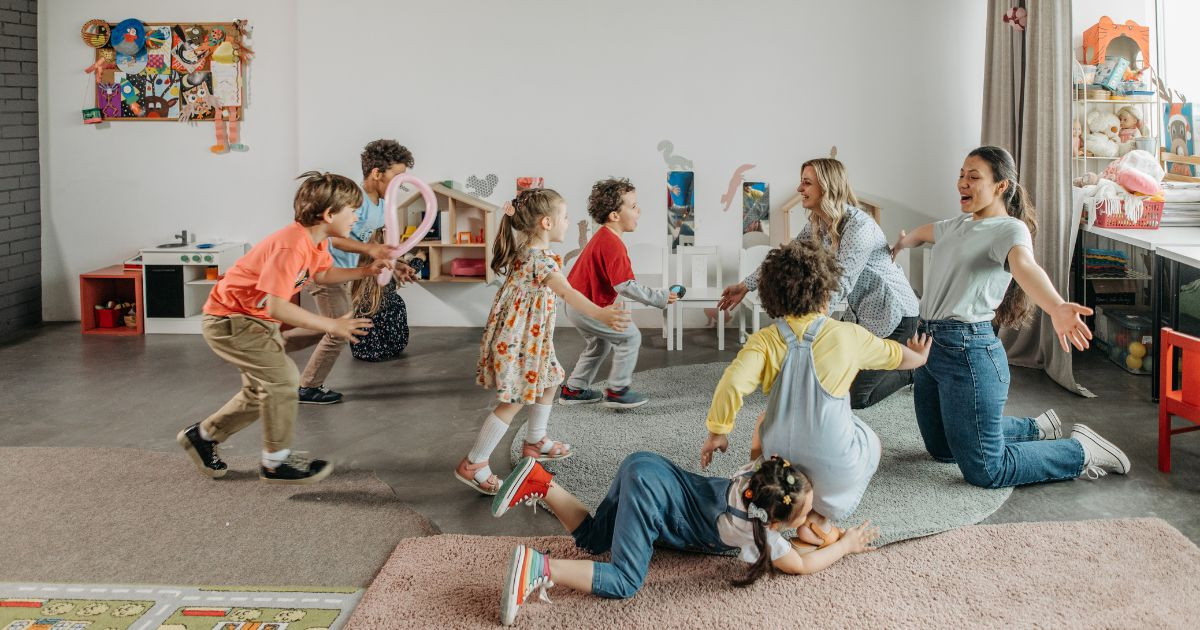
Children aged 7 to 9 are developing quickly in many areas at once. At this stage, movement, thinking, language, and social skills often grow side by side. A child who becomes more coordinated may find school tasks easier, while a child who practices planning, attention, and problem-solving may become more confident in games and everyday activities. That is why motor and cognitive development should not be treated as separate areas. Together, they can support independence, self-confidence, and a stronger sense of personal growth.
This article explains how those skills are connected, which activities may help, and how parents and teachers can support development in practical ways without putting too much pressure on the child.
Why motor skills matter at this age
Motor skills are the abilities children use to move their bodies and control their actions. They include large movements, such as running, jumping, balancing, and throwing, as well as smaller movements like drawing, writing, cutting, and fastening buttons. Between the ages of 7 and 9, children usually become more precise and more aware of how they move, but they still need practice.
Good motor control may support more than physical fitness. It can make it easier for a child to take part in sports, keep up in games with peers, and manage school tasks that require handwriting or careful hand-eye coordination. When children feel physically capable, they are often more willing to try new things.
- Regular physical activity: Running, climbing, skipping, cycling, and swimming may help children build stamina, balance, and coordination.
- Ball games: Games such as soccer, basketball, or volleyball encourage timing, teamwork, reaction skills, and an understanding of space and movement.
- Dance and movement-based activities: These can support rhythm, body awareness, memory, and emotional expression.
How cognitive skills develop between 7 and 9
Cognitive skills include attention, memory, reasoning, planning, language, and problem-solving. Children at this age often begin to think more logically, compare information more carefully, and understand rules in a more structured way. They may also ask more questions and become more interested in how things work.
These changes matter because they help children learn in school and navigate daily situations. A child who can focus for longer, remember instructions, and organize steps in order is better prepared for reading, math, projects, and group tasks. Cognitive growth also supports independence, since children can begin to make more decisions for themselves and reflect on their actions.
- Logic games: Puzzles, chess, matching games, and simple strategy games may strengthen planning, pattern recognition, and concentration.
- Reading and discussion: Reading together and talking about stories can build vocabulary, comprehension, and the ability to explain ideas clearly.
- Hands-on projects: Science experiments, nature observations, and simple craft tasks can support curiosity, prediction, and cause-and-effect thinking.
Why movement and thinking work best together
Motor and cognitive skills often reinforce one another. Movement can give children chances to follow instructions, remember sequences, adapt to changes, and solve problems in real time. At the same time, thinking skills can help children move with more control by improving attention, planning, and self-monitoring.
For example, a child playing an obstacle course must remember the route, judge distances, and adjust movements. In a team game, the child has to watch others, understand rules, and decide when to pass, run, or wait. These situations use both body and mind at once, which makes them especially useful for development.
This connection does not mean every child will improve in the same way or at the same pace. Some children enjoy active games, while others need more time to feel comfortable. The goal is not to force fast progress, but to offer repeated opportunities to practice in a safe and encouraging setting.
Activities that combine both areas
- Outdoor treasure hunts: Children can follow clues, read simple instructions, and move through space to find hidden objects.
- Obstacle courses: These can include jumping, crawling, balancing, and solving a small task at each station.
- Role-play and group games: Pretend play helps children use language, memory, and imagination while also cooperating with others.
- Building challenges: Using blocks or LEGO to copy a model or create a structure supports spatial thinking, patience, and fine motor control.
How parents can support development at home
Children benefit most from regular, low-pressure opportunities to practice different skills. Parents do not need to organize complicated programs. Small, consistent activities often work better than occasional intensive ones.
- Offer variety: Mix active play, reading, drawing, puzzles, sports, and creative projects so the child can develop different abilities.
- Join in when possible: Playing together can make activities more enjoyable and also shows children how to handle effort, mistakes, and progress.
- Keep the environment safe: A safe space makes it easier for children to explore, take reasonable risks, and learn from setbacks.
- Notice effort, not just results: Praising persistence, focus, or improvement may be more helpful than focusing only on winning or finishing first.
Common mistakes to avoid
Parents sometimes assume that a child should excel in every area at once. In reality, children often develop unevenly. A child may be strong physically but struggle with attention, or read well but avoid active play. That is normal.
Another common mistake is overloading children with too many structured activities. Free play is also important because it gives children room to experiment, invent games, and solve problems on their own. If a child seems tired, frustrated, or uninterested, it may help to simplify the task or choose a different activity rather than pushing harder.
Practical activity ideas
If you want simple ways to support both motor and cognitive growth, these activities are easy to adapt at home, in the yard, or at school:
- Mini parkour course: Use cushions, cones, ropes, or boxes to create a safe path that requires balancing, jumping, and changing direction.
- Story building: Ask the child to invent a story and act it out, draw it, or write it down. This combines imagination, language, and movement.
- Copy-and-create tasks: Show a pattern with blocks, beads, or drawings and ask the child to reproduce or improve it.
- Movement games with instructions: Games like “Simon says” or simple reaction games encourage listening, memory, and body control.
What personal growth can look like
For children aged 7 to 9, personal growth often shows up in small but important ways: trying a new game, finishing a puzzle without giving up, joining a group activity, or expressing an idea more clearly. These moments may seem ordinary, but they show that the child is becoming more capable, more confident, and more independent.
Support from adults matters, but children also need time to practice on their own. When they are given the chance to move, think, create, and cooperate, they can build skills that support school learning and everyday life.
The most useful approach is balanced and realistic. Offer variety, keep expectations age-appropriate, and allow the child to learn through both success and mistake. In this way, motor and cognitive development can become a practical part of healthy personal growth.


