
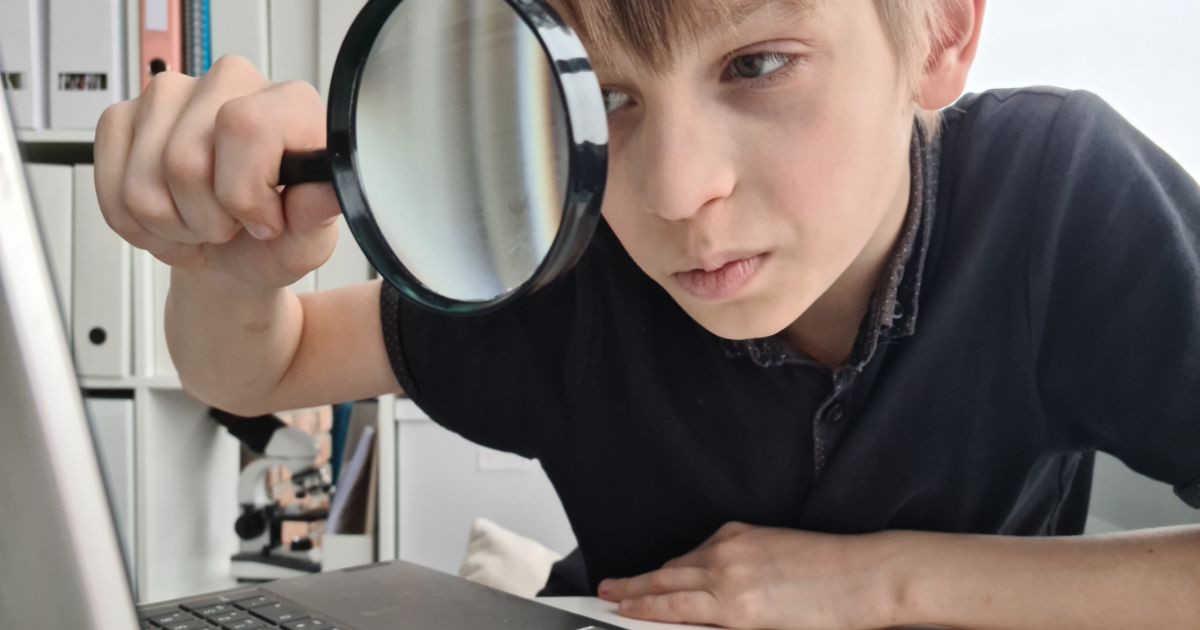
At school, online, and in conversations with other people, you meet more information than you can remember. Some of it is accurate, some is incomplete, and some is designed mainly to persuade or entertain you. Critical thinking means examining information carefully before deciding what to believe or do.
These skills are useful for homework, online safety, solving problems, and making independent choices. They do not mean doubting everything. They mean knowing what questions to ask and what evidence to look for.
What critical thinking helps you do
Critical thinking is a set of habits rather than a single school subject. It can help you:
- Recognize facts: identify claims that can be checked using reliable evidence.
- Separate facts from opinions: notice when someone is expressing a personal preference or judgment.
- Understand different viewpoints: listen to reasons you may not have considered.
- Solve problems: break a difficult question into smaller parts and compare possible solutions.
- Make independent decisions: explain why you reached a conclusion instead of simply copying someone else.
A simple method for checking information
When you find an interesting claim in a video, post, article, or conversation, use the following process:
- Pause: Do not share or repeat the claim immediately, especially if it makes you angry, frightened, or extremely excited.
- Identify the claim: What exactly is being said? Rewrite it in one clear sentence.
- Check the source: Who created the information? Is the author named, and do they have relevant knowledge? Is the source trying to inform, sell, entertain, or persuade?
- Look for evidence: Are there examples, data, explanations, or links to original information? A picture or a large number alone does not prove a claim.
- Compare carefully: Look for confirmation from more than one trustworthy source. Two websites repeating the same unsupported statement are not necessarily independent evidence.
- Decide how certain to be: You may conclude that a claim is well supported, uncertain, misleading, or probably false. It is acceptable to say, “I need more information.”
Questions that reveal missing information
Good questions can uncover details that a short post or dramatic headline leaves out:
- What does this word or number mean in context?
- When and where did this happen?
- What evidence supports the claim?
- What information might have been left out?
- Could there be another explanation?
- Is the information current, or could it be outdated?
Facts, opinions, and reliable sources
A fact is a claim that can be tested or verified. For example, “Water freezes at a particular temperature under specific conditions” can be checked. An opinion expresses a belief, preference, or judgment, such as “This is the best book.” Opinions are not automatically wrong, but they should not be presented as proven facts.
Reliability depends on the question. A school textbook, museum, library resource, official organization, or carefully edited news source may be useful, but each source can still contain mistakes or limits. Check the date, author, purpose, evidence, and level of expertise rather than trusting a source only because it looks professional.
| Signal | What it may suggest | What to do |
|---|---|---|
| Strong emotional language | The content may be trying to influence your reaction. | Pause and check the claim separately from the emotion. |
| No author or evidence | The information is difficult to verify. | Find a more transparent source. |
| Clear date and supporting sources | The creator is giving readers ways to investigate. | Check whether the sources actually support the claim. |
Practise critical thinking every day
You do not need a complicated project to improve. Try these activities:
- Compare two explanations: note what they agree on, where they differ, and which provides stronger evidence.
- Explain your reasoning: when choosing a solution, describe the evidence and steps that led to your decision.
- Discuss respectfully: challenge an idea without attacking the person. Ask, “What makes you think that?”
- Keep an evidence note: write down a claim, the source, evidence for it, and questions that remain.
- Review mistakes: if new evidence changes your mind, identify what you learned. Updating a conclusion is a strength, not a failure.
Why these skills matter as you grow
Working with information supports learning now and prepares you for future study, work, and everyday decisions. It can help you communicate clearly, choose useful sources, cooperate with people who think differently, and notice when a promise has weak support.
Start with one claim each day. Pause, ask questions, check the source, and explain your conclusion. Over time, these small habits can make you a more careful learner and a more confident decision-maker—without requiring you to believe that you are always right.


