
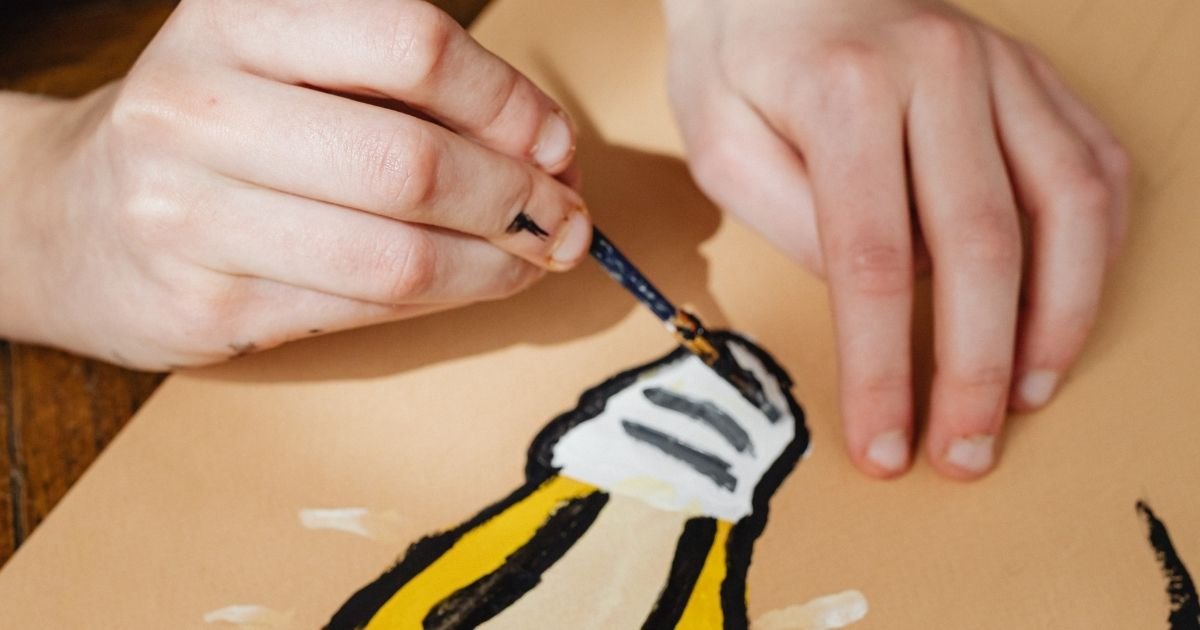
A child announces they have invented shoes for walking on ceilings, a school desk that explains assignments, or a vehicle that changes shape to suit the terrain. An adult’s first response is often practical: “That’s impossible.” But that can end the creative process before it has even begun. A more useful question is: What problem is this idea meant to solve, and what would it need to do to be useful?
Children aged 10 to 12 can do more than imagine. They can compare options, explain a purpose, and adapt a design to meet different conditions. Creativity does not have to stop at coming up with something unusual. It can also mean developing an idea with a clear function, a specific user, and a reason to exist.
Imagination and usefulness can go together
A creative idea can be bold and thoughtful at the same time. A flying vehicle may not be realistic under today’s conditions, but a child can still explore the need it might address. Would it make journeys shorter, reach places without roads, or reduce traffic?
Once you focus on the need, an idea can begin to develop from a picture into a solution. Imagination creates possibilities; questions give them direction.
Start with a problem, not an object
If a child is asked to “invent a new object for school,” they may start by combining technologies at random. That is fine as a first step, but you can make the next step more focused.
Begin by asking about situations that are inconvenient, time-consuming, or frustrating:
- What do people waste time looking for at school?
- What do students often get wrong?
- What is difficult to carry, organise, or explain?
- What could be easier for both teachers and students?
- What everyday activity could be done differently?
One specific problem can lead to several different solutions. This helps children see that creativity does not begin only with “What new thing can I invent?” It can also begin with “What is worth improving?”
Help your child identify the user
The same invention will not suit everyone. A school tool for a young child may need to meet different requirements from one designed for a teacher. A vehicle for a city faces different conditions from one intended for a forest.
Try this simple prompt: “This is for someone who…” Your child can then describe what that person needs, what gets in their way, and what the solution must make easy.
| Question | What it helps clarify |
|---|---|
| Who will use it? | Who the solution is for |
| In what situation? | Where and when it needs to work |
| What causes difficulty today? | Which problem the solution should address |
| What must be simple? | Which features matter most |
This helps children understand that a good idea is not just interesting to its creator. It should also make sense to the person who will use it.
Generate several options before choosing one
If the first idea is judged immediately, creative exploration can quickly narrow. It helps to separate generating options from evaluating them.
Set a simple challenge: come up with five different ways to solve one problem. They do not all have to be practical. One might use technology, another a mechanical approach, a third a change in the rules, and a fourth could be completely imaginary.
Only after that, ask which solution is most useful, simplest, most interesting, or easiest to test.
Constraints can support creativity
An entirely open-ended task may sound appealing, but some children find it hard to know where to start. A constraint can create a clearer space for thinking.
Add one or two conditions to the design challenge:
- It must not use electricity.
- It must be possible to carry in one hand.
- It must be made from old or readily available materials.
- It must be usable by more than one person.
- It must not create unnecessary waste.
The child is no longer looking for just any idea, but for a solution within a defined framework. A constraint changes the question and can reveal possibilities that might not occur to them with complete freedom.
When reusing old objects, focus on function
A challenge to make something new from old objects is a good way to practise rethinking what things can do. A box does not have to remain packaging, a plastic container does not have to remain a container, and old cardboard does not have to be waste.
Ask: “What properties does this object have?” It might be strong, light, transparent, flexible, hollow, or waterproof. Then look for a new use based on one of those properties.
For example, sturdy cardboard could become a structural part, a divider, a template, or the base for a prototype. Children learn to look beyond what an object is called and consider what it can do.
A sketch should show how it works, not how artistic it is
Once a child has an idea, a simple sketch can reveal things that were not obvious in their imagination. It does not need to be neat or precise. It should show what goes where, what moves, how something is controlled, and how the user interacts with it.
As they sketch, ask:
- What is the main part?
- What needs to move or change?
- What will the user do first?
- What happens next?
- Where might a problem arise?
A sketch like this turns a vague idea into a more concrete system.
A prototype does not have to be a finished product
Children sometimes think that if they cannot make something for real, they cannot test it. But a prototype can be a simple model made from paper, cardboard, building blocks, or objects that represent different parts.
If a child is designing a new way to communicate, they could create a set of symbols and see whether another person understands them. For a new school tool, they could make a paper model and simulate how someone would use it.
The purpose of a prototype is not to look finished. It is to reveal what works in the design and what is missing.
Test one specific question at a time
“Let’s see if it’s good” is too broad. It is better to choose one question. For example: Can another person understand these symbols? Can the bridge model hold a load? Can the object be used with one hand? Is the process shorter than before?
A focused question helps children assess the result. If the test does not go well, they know which part of the design to change.
For the next attempt, change one or two things rather than the whole project at once. That makes it easier to understand what actually made a difference.
Consider the drawbacks of a good idea, too
Creativity is not only about looking for benefits. Every solution can bring new problems. A vehicle that adapts to the terrain might be complicated. A wordless communication system might be fast but ambiguous. A city without fixed rules might seem freeing, but make some shared situations harder to manage.
For each design, children can try to identify:
- what it improves,
- what it might make more difficult,
- who it could work well for,
- who it might not work well for,
- what would need to change to make it more useful.
This brings creative thinking together with critical thinking without letting criticism stop ideas from developing.
Ask questions before correcting the design
If an adult explains exactly what an invention should look like, the result may be technically better, but the creative work has shifted to the adult. More useful support helps the child make their next decision.
Instead of saying, “Do it this way,” try asking:
- “What are you trying to solve?”
- “How will you know whether it works?”
- “What part of the design are you least sure about?”
- “What other option could you come up with?”
- “What would you simplify if you had half the materials?”
Questions like these leave the decisions with the child while still giving them structure.
A common mistake is judging an idea too soon
With imaginative designs, it is easy to focus immediately on whether they are realistic. But if a child is still generating possibilities, early judgement can limit the process to what they already know.
It is better to split the work into two stages. First, let the idea develop without requiring it to be feasible. Then explore which parts could be applied in real life.
For example, a portal for instant travel may not be technically feasible. But it can prompt questions about why people want to travel faster, what they find difficult about travelling today, and what other solutions might ease the problem.
A simple creative challenge to try at home
Every so often, choose an everyday problem and work through the process with your child. You do not need expensive equipment.
- Name the problem: What is inconvenient today, or what could be improved?
- Identify the user: Who should the solution help?
- Generate several options: Do not judge them straight away.
- Choose one: Use clear criteria, such as usefulness and simplicity.
- Sketch how it works: Focus on its function, not just its appearance.
- Make a simple model: Use materials you already have.
- Test one question: Does the solution actually do what it is meant to do?
- Revise the design: Use the results, rather than relying on the original idea.
This process shows children that creativity is more than having unusual ideas. It is also the ability to turn an idea into a solution with a clear purpose, test it, and improve it over time.


